403 West Windsor Road, Champaign, IL 61820.

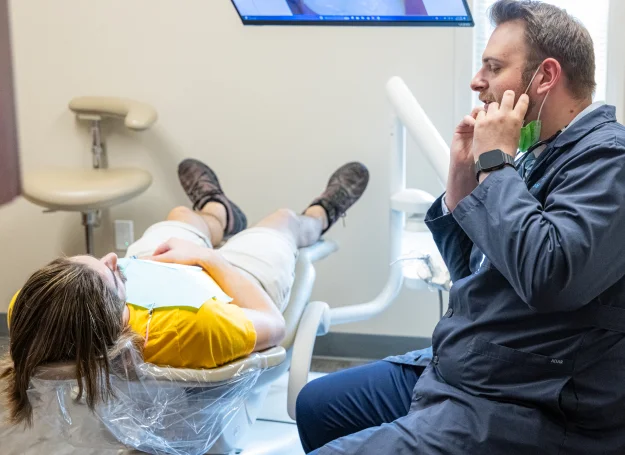
Healthier Gums Start With the Right Team
Gum disease is one of the most common and most overlooked oral health conditions in adults. It often develops silently, with symptoms that are easy to dismiss until significant damage has already been done. At W. Eric Martin, DDS, PC in Champaign, IL, we want to help you prevent and treat gum disease before it deteriorates your smile. Good dental hygiene includes attentive care of both your teeth and your gums, but sometimes, your gums need extra help. That's exactly what we're here for.
Schedule a Gum Assessment
What is Gum Disease and How Do We Treat It?
Gum disease, also known as periodontal disease, is a bacterial infection of the tissues that support your teeth. It begins with gingivitis, the earliest and most treatable stage, and can progress to periodontitis if left unaddressed. Advanced gum disease is one of the leading causes of tooth loss in adults, making early detection and treatment critical.
At every visit, our team checks for signs of gingivitis and gum disease as part of your routine exam. Catching and addressing it early can save you from potential tooth loss, extensive treatment, and the discomfort that comes with letting the condition go untreated.
Do Your Gums Need Attention? Here Are the Signs
Gum disease doesn't always announce itself with obvious pain or discomfort, which is exactly what makes it so easy to ignore. Knowing the warning signs can make all the difference in catching it early.
Common signs of gum disease include:
- Gums that bleed when you brush or floss
- Red, swollen, or tender gum tissue
- Gums that are pulling away from your teeth (recession)
- Persistent bad breath that doesn't go away with brushing
- Teeth that feel loose or have shifted position
- Pain or sensitivity when chewing
- Changes in the fit of your bite or dentures
If you're experiencing any of these symptoms, even just one, it's worth scheduling an assessment. The earlier we can evaluate your gum health, the more treatment options are available, and the better your outcome is likely to be.
How We Treat Gum Disease
Comprehensive Assessment
We examine your gums, measure pocket depths, and take X-rays to determine the extent of the disease and the right course of treatment for your specific situation.
Professional Cleaning
For early-stage gum disease, a thorough professional cleaning to remove plaque and tartar above and below the gumline is often the first step in reversing the condition.
Scaling & Root Planing
For more advanced cases, we perform a deep cleaning procedure called scaling and root planing. This involves carefully removing tartar and bacteria from below the gumline and smoothing the root surfaces to help the gums reattach and heal.
Ongoing Monitoring
Gum disease is a chronic condition that requires ongoing management. We'll schedule follow-up visits to track your healing, monitor pocket depths, and make sure the disease stays under control.
Maintenance Plan
Once your gum health is stabilized, we'll work with you on a personalized maintenance schedule, typically more frequent cleanings, to prevent recurrence and keep your smile healthy long-term.
The Four Stages of Gum Disease
You’ve probably heard the term “gingivitis” and wondered how it relates to gum disease. To understand this, it’s important to know that gum disease progresses through three stages, each with its own characteristics and symptoms.
Stage I
Initial Periodontitis
The earliest stage of periodontal disease, where the infection has begun to affect the supporting structures of the teeth but damage is still limited. Some bone loss may be present, gum pockets begin to deepen, and bleeding during brushing or flossing is common. At this stage, the condition is very manageable with professional treatment and improved home care, making early detection critical.
Stage II
Moderate Periodontitis
As the disease progresses, bone loss becomes more measurable and gum pockets deepen further. Gums may begin to recede and teeth can become more sensitive. While the condition is still treatable, more intensive professional intervention, typically scaling and root planing, is needed to stop further progression and stabilize the supporting structures.
Stage III
Severe Periodontitis
At this stage, significant bone and tissue loss has occurred, and teeth may begin to feel loose or shift position. The risk of tooth loss is real and increasing. Treatment becomes more complex and may involve surgical procedures alongside deep cleaning therapy. Prompt care is essential to preserve as many teeth as possible.
Stage IV
Advanced Periodontitis
The most severe stage, characterized by extensive bone destruction, severe tooth mobility, and a high likelihood of tooth loss without aggressive intervention. Treatment at this stage often involves surgical procedures, including gum grafting, and in some cases, teeth may not be salvageable. This is why treating gum disease at its earliest stages is so vital. The further it progresses, the more complex and extensive the path back to health becomes.

Don't Wait, Your Gums Are Worth It
Gum disease doesn't get better on its own, but it is treatable, and the sooner you act, the better. Call W. Eric Martin, DDS, PC in Champaign, IL to schedule a gum assessment as soon as possible. Our experienced, compassionate team will evaluate your gum health, explain your options clearly, and help you take back control of your smile. You'll be glad you did.
Schedule a Gum Assessment
Frequently Asked Questions About Gum Disease Treatment
What is the difference between gingivitis and periodontitis?
Gingivitis is the earliest, mildest stage of gum disease — characterized by inflammation and bleeding of the gums. It is fully reversible with professional treatment and good home care. Periodontitis is the more advanced form, where the infection has spread to the bone and connective tissue supporting the teeth. Periodontitis is manageable but not fully reversible, making early treatment essential.
How do I know if I have gum disease?
Common signs include bleeding gums, persistent bad breath, gum recession, swelling or redness, and loose teeth. However, gum disease can also be present with no noticeable symptoms at all — which is why we screen for it at every routine visit. If you have any concerns, don't wait for symptoms to worsen. Call us and we'll take a look.
How long do dental sealants last?
Dental sealants typically last several years under the force of normal chewing. During your routine checkups, we'll inspect your sealants and let you know if any need to be touched up or reapplied. With proper care, they remain effective for many years.
Is gum disease treatment painful?
Most patients find gum disease treatment very manageable. For deeper cleaning procedures like scaling and root planing, we use local anesthetic to keep you comfortable throughout. Any mild soreness afterward typically resolves within a day or two. Our team will walk you through exactly what to expect before we begin.
Can gum disease be reversed?
Gingivitis — the earliest stage — can be fully reversed with professional treatment and improved home care. More advanced periodontitis cannot be fully reversed, but it can be effectively managed and stabilized to prevent further damage and protect your teeth long-term.
Can gum disease cause tooth loss?
Yes. Advanced periodontitis is one of the leading causes of tooth loss in adults. The infection destroys the bone and connective tissue that hold your teeth in place, eventually causing them to loosen and fall out or require extraction. Early treatment is the most effective way to prevent this outcome.
How can I prevent gum disease from coming back?
Consistent home care — brushing twice daily, flossing daily, and using an antibacterial mouthwash — combined with regular professional cleanings is the foundation of gum disease prevention. Patients who have been treated for gum disease often benefit from more frequent maintenance visits (every 3–4 months rather than every 6) to keep the condition under control.
Is gum disease linked to other health conditions?
Yes — research has established connections between periodontal disease and a number of systemic health conditions, including heart disease, diabetes, respiratory illness, and complications during pregnancy. Treating gum disease is not just about protecting your smile; it's an important part of your overall health.
Do you treat gum disease in patients who haven't been to the dentist in a long time?
Absolutely. We welcome patients at every stage of their oral health journey, including those who haven't seen a dentist in years. We understand that life gets in the way, and we never make patients feel judged or embarrassed. What matters is that you're here now — and we're ready to help.
