403 West Windsor Road, Champaign, IL 61820.

Bridge the Gap and Get Your Smile Back.
A missing tooth does more than affect your appearance. Over time, the surrounding teeth can shift toward the gap, your bite can change, and the jawbone beneath the empty space can begin to deteriorate. A dental bridge is a time-tested, reliable solution that fills the gap, restores your ability to chew and speak comfortably, and prevents the chain of problems that a missing tooth can set in motion. At W. Eric Martin, DDS, PC in Champaign, IL, we focus on aesthetics, fit, and comfort to provide bridges that look and feel just like your natural teeth.
Schedule an Appointment
What Is a Dental Bridge and How Does It Work?
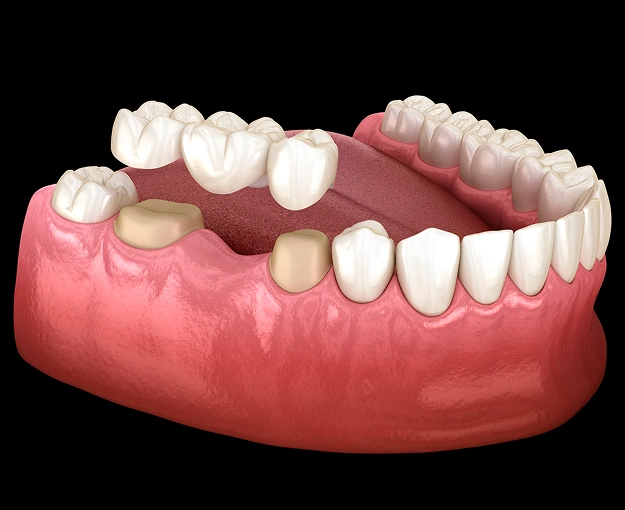
A dental bridge is a fixed restoration that literally bridges the gap left by one or more missing teeth. It consists of one or more artificial teeth, called pontics, anchored in place by crowns on the healthy natural teeth on either side of the gap. Those anchoring teeth, known as abutment teeth, are gently reshaped to support the crowns, which hold the bridge securely in position.
Unlike dentures, a dental bridge is permanently fixed in your mouth. It doesn't come in and out. It looks, feels, and functions like your natural teeth, and with proper care it can last many years.
At W. Eric Martin, DDS, PC, we custom-design every bridge with careful attention to the shape, size, and color of your surrounding teeth so the result blends in seamlessly and gives you a smile you're proud to show off.
Your Bridge Appointment, Step by Step
Comprehensive Assessment
We examine the gap, the surrounding teeth, and your overall oral health to confirm that a dental bridge is the right solution for your situation. X-rays help us evaluate the health of the abutment teeth and the bone beneath the gap.
Prepare the Abutment Teeth
We gently reshape the teeth on either side of the gap to create the ideal foundation for the crowns that will anchor your bridge. Local anesthetic keeps you completely comfortable throughout.
Digital Impressions
We take precise digital impressions of the prepared teeth and the gap to ensure your bridge is custom-crafted for an exact, comfortable fit.
Temporary Bridge
While your permanent bridge is being fabricated, we place a temporary bridge to protect the prepared teeth and keep you functional and comfortable in the meantime.
Custom Fabrication
Your bridge is crafted from high-quality dental materials, carefully matched in color, shape, and size to your surrounding natural teeth for a seamless, natural-looking result.
Fitting & Adjustments
When your permanent bridge is ready, we remove the temporary and try in the new bridge for fit and comfort. We make any necessary adjustments to ensure your bite feels completely natural.
Permanent Placement
Once everything looks and feels right, we permanently cement the bridge in place. You leave with a fully restored smile, stable, strong, and natural-looking.
Why It's Important to Replace a Missing Tooth
It can be tempting to leave a missing tooth alone, especially if it's toward the back of your mouth where it's less visible. But the consequences of an untreated gap go well beyond aesthetics, and they tend to compound over time.
Here's what can happen when a missing tooth is left unaddressed:
- Shifting teeth — Surrounding teeth naturally drift toward the open space, causing misalignment and bite problems.
- Bone loss — The jawbone beneath a missing tooth begins to resorb over time without the stimulation a tooth root provides, leading to changes in facial structure.
- Increased decay risk — Shifted and crowded teeth are harder to clean properly, increasing the risk of cavities and gum disease.
- Difficulty chewing — Missing teeth put extra strain on the remaining teeth, affecting how you chew and potentially causing wear.
- Changes in appearance — Over time, bone loss and shifting teeth can change the shape of your face and the look of your smile.
A dental bridge addresses the gap before any of these complications have a chance to take hold, or halts them if they've already begun.
Don't Let a Missing Tooth Define Your Smile.
A gap in your smile doesn't have to be permanent and the longer you wait, the more complex the solution can become. At W. Eric Martin, DDS, PC in Champaign, IL, we'll help you find the right tooth replacement solution and guide you through every step of the process with skill and genuine care. Call us or request an appointment online to schedule your assessment today.
Schedule an Appointment
Frequently Asked Questions About Dental Bridges
How many teeth can a dental bridge replace?
A dental bridge can replace one or several consecutive missing teeth. The most common bridge replaces a single missing tooth, but bridges can span larger gaps depending on the strength and health of the abutment teeth on either side. We'll assess your specific situation and let you know what's possible.
How long does a dental bridge last?
With proper care, a dental bridge typically lasts 10 to 15 years or more. Longevity depends on the materials used, your oral hygiene habits, and whether you attend regular checkups. We'll monitor your bridge at every routine visit and let you know if it needs any attention.
Does getting a dental bridge hurt?
No. The procedure is performed under local anesthetic, so you won't feel pain during the preparation or placement appointments. Some mild sensitivity or soreness for a day or two after each appointment is normal and resolves quickly.
How do I clean a dental bridge?
Because a bridge is fixed in place, you can't floss between the artificial tooth and your gums the traditional way. We'll show you how to use a floss threader or interdental brush to clean effectively underneath and around the bridge. Regular brushing twice daily and routine professional cleanings are essential to keeping your bridge and the surrounding teeth healthy.
Will my dental bridge look natural?
Yes — that's a central focus of how we design every bridge at W. Eric Martin, DDS, PC. We carefully match the color, shape, and size of the bridge to your surrounding natural teeth so the restoration blends in completely. Most people will never know it's there.
How long will my appointments take?
Your first appointment — for examination, tooth preparation, and impressions — typically takes one to two hours. Your second appointment to place the permanent bridge is usually shorter. We'll give you a clear timeline before we begin so you can plan accordingly.
Can a dental bridge fail?
In rare cases, a bridge can loosen, crack, or fail — usually due to decay in the abutment teeth, trauma, or normal wear over time. This is why routine checkups are so important. Catching any issues early means we can address them before they become bigger problems.
Is a bridge or an implant the better option?
Both are excellent tooth replacement options, and the right choice depends on your individual situation. Implants preserve bone health more effectively and don't require reshaping the adjacent teeth — but they involve surgery and a longer timeline. Bridges are a proven, non-surgical alternative that can be completed more quickly. We'll help you weigh the options at your consultation.
