403 West Windsor Road, Champaign, IL 61820.

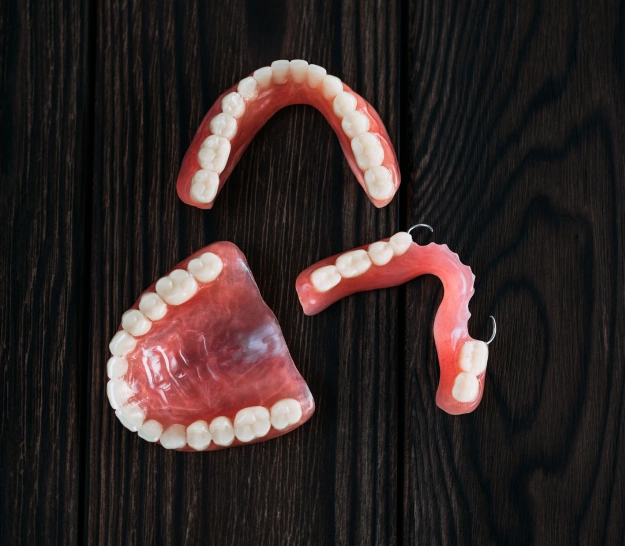
Rediscover Your Smile and Everything That Comes with It
Missing teeth affect more than just your appearance. They change the way you chew, the way you speak, and often the way you feel about yourself. At W. Eric Martin, DDS, PC in Champaign, IL, we believe that no one should have to live with decreased oral function or confidence. Whether you're missing several teeth or all of them, our team will work with you to find the right denture solution. One that looks natural, fits comfortably, and lets you get back to enjoying the foods you love and the life you deserve.
Schedule Your Visit
Types of Dentures
Every patient's situation is different, and the right denture solution depends on how many teeth are missing, the health of your remaining teeth and gums, your lifestyle, and your goals. At W. Eric Martin, DDS, PC, we take the time to thoroughly assess your oral health and walk you through every option, so you can make a confident, informed decision about your care.
We provide three main types of dentures and partials:
Conventional Full Dentures
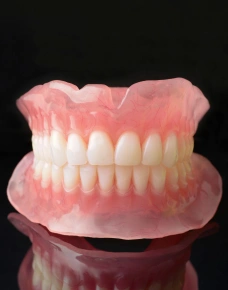
A conventional full denture replaces an entire arch of missing teeth, upper, lower, or both. After any remaining teeth are removed, we allow time for the gum tissue to heal fully before the denture is fitted and placed. This healing period ensures the most accurate, comfortable fit possible, as the gum shape stabilizes before your final restoration is made.
Conventional full dentures are custom-crafted to closely resemble natural teeth in shape, size, and color so your smile looks as lifelike as possible. They are removable for easy cleaning and maintenance.
Best for: Patients who have already lost all teeth in one or both arches, or those whose remaining teeth cannot be saved and need to be removed.
Immediate Full Dentures
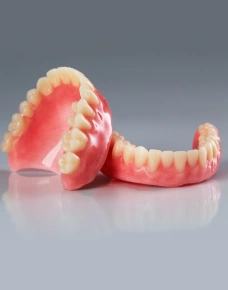
Immediate dentures are placed on the same day your remaining teeth are extracted — so you're never without a smile during the healing process. Because they are made in advance of extraction using preliminary measurements, immediate dentures may require more frequent adjustments as your gums heal and reshape over the following weeks and months.
Think of immediate dentures as a transitional solution that keeps you functional and confident while your mouth heals, with refinements along the way to improve the fit as things settle.
Best for: Patients who want to avoid going without teeth during the healing period after extractions.
Partial Dentures
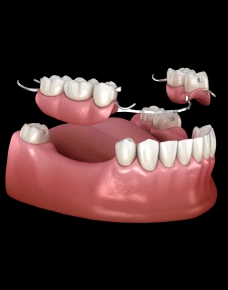
If you still have healthy natural teeth remaining, a partial denture fills in the gaps left by missing teeth without requiring the removal of any existing teeth. Partials are attached to your natural teeth using discreet clasps or precision attachments, keeping them stable and secure during everyday activities like eating and speaking.
Like full dentures, partials are removable for cleaning and are custom-designed to blend in naturally with your remaining teeth, matching their color, shape, and overall appearance.
Best for: Patients who are missing multiple teeth in an arch but still have healthy natural teeth that can support the partial.
Your Denture Process, Step by Step
Comprehensive Assessment
We examine your teeth, gums, and bone structure to determine which denture solution is right for you. X-rays and digital scans give us a complete picture of your oral health before we begin planning your restoration.
Treatment Planning
We walk you through your options, answer your questions, and create a personalized treatment plan that addresses your specific needs, timeline, and goals.
Impressions & Measurements
We take precise impressions and measurements of your mouth to ensure your denture is custom-crafted to fit your unique anatomy, not a one-size-fits-all solution.
Custom Fabrication
Your denture is crafted by a skilled dental lab using high-quality materials chosen for their durability and natural appearance. We select tooth shades and shapes that complement your facial features for the most lifelike result.
Fitting & Adjustments
Once your denture is ready, we fit it in our office and make any necessary adjustments to ensure optimal comfort and function. For immediate dentures, this step is ongoing as your gums heal.
Final Placement & Care Instructions
We place your final denture, confirm the fit and bite, and walk you through everything you need to know about caring for your new restoration, so it stays comfortable and looking great for years to come.
Natural-Looking. Comfortable. Made for You.
One of the most common concerns patients have about dentures is how they'll look and whether anyone will be able to tell. At W. Eric Martin, DDS, PC, we prioritize aesthetics, fit, and comfort in every denture we provide. Our focus is on creating restorations that look like your natural teeth because the best denture is one that nobody notices.
We carefully select tooth shapes, sizes, and shades that complement your facial structure and complexion. We pay close attention to the fit so your denture stays stable and comfortable during daily activities. And we take the time to make adjustments until everything feels exactly right.
The goal isn't just to fill the gaps in your smile. It's to restore your ability to eat the foods you enjoy, speak clearly and confidently, and smile without reservation.
Take the First Step Toward a Complete Smile
You don't have to live with missing teeth or the limitations that come with them. At W. Eric Martin, DDS, PC in Champaign, IL, we'll help you find the right denture solution and walk you through every step of the process with care and expertise. Call us or request an appointment online to schedule your assessment and take the first step toward a smile you're proud to show off.
Schedule an Appointment
Frequently Asked Questions About Dentures & Partial
How do I know if I need full dentures or a partial?
The right option depends on how many teeth you have remaining and the health of those teeth. If you have no remaining teeth — or teeth that cannot be saved — full dentures are the appropriate solution. If you still have healthy natural teeth, a partial denture can fill in the gaps while preserving what you have. We'll assess your situation thoroughly and make a clear recommendation during your consultation.
How long does it take to get dentures?
The timeline varies depending on the type of denture and your individual situation. Conventional full dentures typically take several weeks from the initial assessment to final placement, as we allow time for healing after extractions and for the denture to be custom-fabricated. Immediate dentures are placed the same day as extractions. We'll give you a clear timeline during your consultation.
Will my dentures look natural?
Yes — that's one of our primary goals. We carefully select tooth shapes, sizes, and shades that complement your natural features and facial structure. Modern denture materials closely mimic the appearance of natural teeth and gum tissue, and most patients find that their dentures are undetectable to others.
Will I be able to eat normally with dentures?
Most patients can eat a wide variety of foods comfortably once they've adjusted to their dentures. There is typically a short adjustment period during which we recommend starting with softer foods. Over time, most patients find they can enjoy the foods they love — though very hard, sticky, or tough foods may require some caution.
How do I clean and care for my dentures?
Remove your dentures daily and clean them with a soft-bristled brush and denture-specific cleaner. Avoid regular toothpaste, which can scratch the surface. Rinse them after eating when possible, and soak them overnight to help maintain their shape and hygiene. Handle them carefully over a folded towel or basin of water to avoid breakage if dropped.
How long do dentures last?
With proper care, dentures typically last 5 to 10 years before needing to be replaced. Over time, the fit may change as your jaw bone and gum tissue naturally shift — which is why routine checkups are important even after you have dentures. We'll monitor the fit and recommend adjustments or replacement when needed.
What is a denture reline?
A reline is a procedure that reshapes the underside of your denture to improve its fit as your mouth changes over time. Relines are common and can often be completed in a single appointment. If your denture is feeling loose, uncomfortable, or causing sore spots, a reline may be all that's needed to restore a comfortable fit.
Can I sleep with my dentures in?
It's generally recommended to remove your dentures at night. Giving your gum tissue a rest period helps maintain its health and allows you to soak and clean your dentures thoroughly. We'll give you specific guidance based on your situation.
